Bringing home a new puppy is one of the best feelings in the world — until you step in your third puddle of the day. If you’re wondering whether it’s actually possible to potty train a puppy in just one week while juggling a full-time job, here’s the honest answer: yes, you can build the foundation in 7 days. Your puppy won’t be perfect after a week (no puppy is), but by following this plan, you’ll have a pup who understands where to go, a routine that prevents most accidents, and a clear path to full reliability.
This guide gives you a realistic day-by-day plan designed specifically for busy owners. Let’s get started.
What You’ll Need Before Day 1
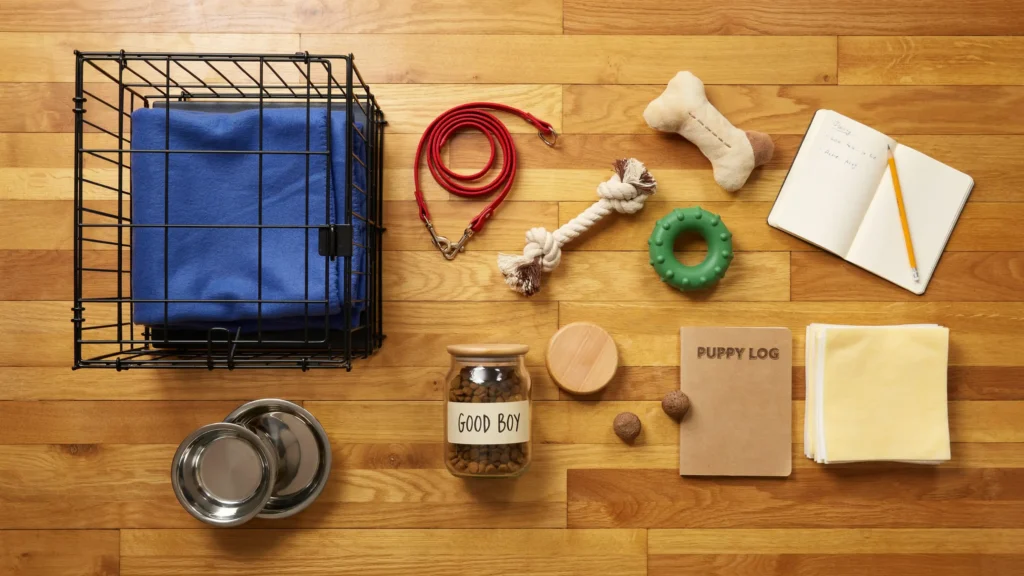
Set yourself up for success by gathering these supplies before you begin:
- A crate sized so your puppy can stand, turn around, and lie down — but not much bigger. Too much space lets them sleep in one corner and potty in another.
- An exercise pen or puppy-proofed room for the hours you’re at work.
- Puppy pads (only for the work-hours setup — more on this below).
- High-value treats cut into pea-sized pieces. These are potty-success treats only, so make them special.
- An enzymatic cleaner like Nature’s Miracle. Regular cleaners don’t remove the odor that pulls puppies back to the same spot.
- A leash for supervised potty trips, even in your own yard.
The Golden Rules of Potty Training
Before the day-by-day plan, burn these four rules into your memory. They matter more than any schedule.
1. Supervision or confinement — always. Every accident that happens out of your sight teaches your puppy that pottying indoors is fine. When you can’t watch your puppy with your full attention, they should be in the crate or pen.
2. Reward within 3 seconds. Puppies connect rewards to whatever they did in the last few seconds. Treat and praise the moment they finish going outside — not when you get back in the house.
3. Never punish accidents. Rubbing their nose in it or scolding doesn’t teach them not to go inside. It teaches them not to go in front of you — which leads to puppies hiding behind the couch to pee. If you find an accident, quietly clean it up and supervise better next time.
4. Know your puppy’s bladder limit. A general rule: puppies can hold it for about one hour per month of age, plus one. So an 8-week-old puppy (2 months) can manage roughly 2-3 hours maximum during the day.
The 7-Day Potty Training Plan
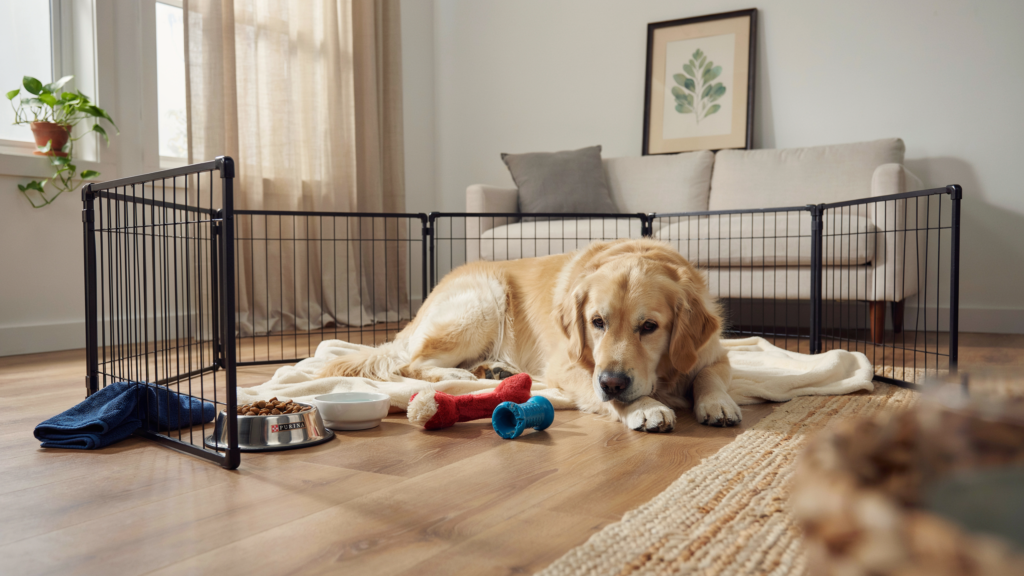
Day 1 (Start on a Saturday): Establish the Routine
Start this plan on a weekend so you can give the first two days your full attention.
Take your puppy out to the same spot in the yard at all of these times:
- Immediately after waking up (morning and naps)
- 10-15 minutes after every meal and big drink
- After every play session
- Every 60-90 minutes in between
- Right before bed
Walk out on a leash, stand still at the potty spot, and wait quietly for up to 5 minutes. The moment your puppy finishes going, say your cue word (“go potty!”), give a treat, and throw a little praise party. If nothing happens after 5 minutes, go back inside, keep the puppy in the crate for 10-15 minutes, then try again.
Today’s goal: zero unsupervised time. Your puppy is either being actively watched, on a leash near you, or in the crate.
Day 2: Learn Your Puppy’s Signals
Keep the exact same schedule as Day 1, but today your job is to study your puppy. Most puppies show a “tell” right before they need to go:
- Sniffing the floor in circles
- Suddenly wandering away from play
- Whining or heading toward the door
- Squatting (obviously — scoop them up fast and head outside)
Write down roughly when your puppy actually goes. By tonight, you’ll start seeing a pattern — most puppies are surprisingly predictable.
Day 3: Add the Potty Cue
Your puppy is starting to connect the yard spot with pottying. Now make the cue word work for you. Say “go potty” in a happy voice as your puppy starts to go, then treat when they finish. Within a couple of weeks, this cue will let you ask for a potty on command — a lifesaver on rainy nights and busy mornings.
Keep the same schedule. If yesterday’s notes showed your puppy reliably goes 20 minutes after eating instead of 10, adjust your timing.
Day 4: The First Workday — Your Survival Setup
Here’s where the full-time job plan kicks in. A young puppy physically cannot hold it for 8-9 hours, so you need one of these arrangements:
Option A (best): A midday potty break. Come home at lunch, ask a neighbor, hire a dog walker, or use a service like Rover. Even one midday break dramatically speeds up training.
Option B: The pen setup. Set up an exercise pen with the crate (door open) at one end, water, safe toys, and puppy pads at the opposite end from the bed. Puppies instinctively avoid soiling where they sleep, so they’ll use the pads. Yes, this slows training slightly compared to outdoor-only — but it’s far better than letting a puppy have accidents in a crate, which can break their clean-den instinct entirely.
Your workday schedule:
- 6:30 AM — Wake up, straight outside, breakfast, play, one more potty trip
- 8:00 AM — Final potty trip, then into the pen
- 12:00-1:00 PM — Midday break (you, a neighbor, or a walker): potty, short play, fresh water
- 5:30 PM — Home! Straight outside before anything else
- Evening — Back to the Day 1-3 routine: out every 60-90 minutes, after meals, after play
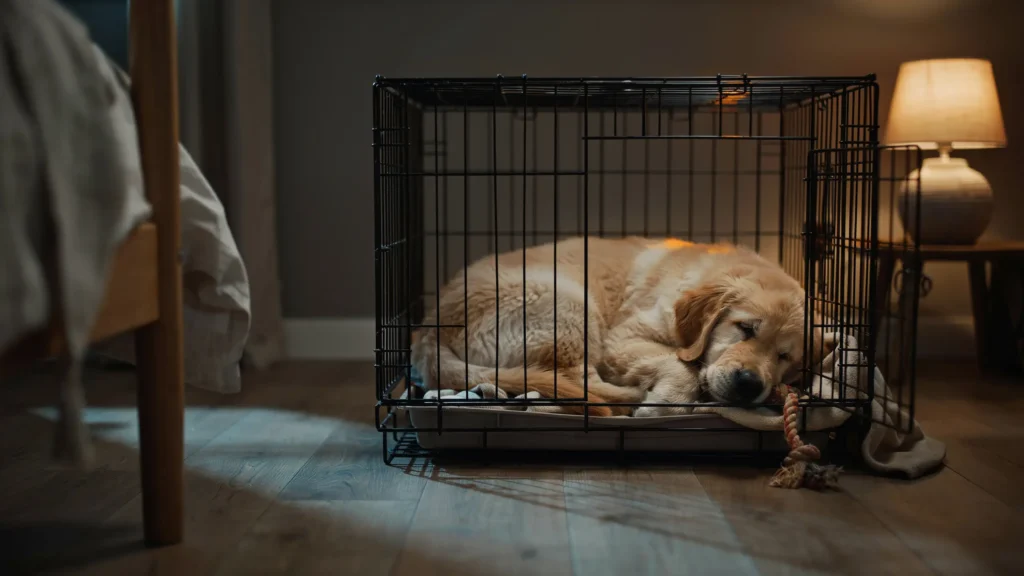
- 10:30 PM — Last potty trip, then crate for the night
Day 5: Tighten the Evenings
You can’t control much during work hours, so make evenings count. From the moment you get home until bedtime, follow the supervision rules perfectly. This is where most working owners slip — they’re tired, they relax on the couch, and the puppy sneaks off for an accident.
Two tricks that help:
- Tether training: Clip the leash to your belt or the couch leg so the puppy stays within sight while you relax.
- Close doors: Limit the puppy to the room you’re in. Fewer rooms means fewer hidden accident spots.
Day 6: Stretch the Intervals
If your puppy has had a dry day or two, start stretching the time between trips by 15-30 minutes. Instead of every 60-90 minutes, try every 90-120 minutes (adjusted for age). You’re teaching the bladder to hold a little longer.
Also start asking for the potty cue before your puppy shows signals. If they go on cue, jackpot them — three or four treats in a row plus big praise.
Day 7: Test and Trust (a Little)
By today, most puppies on this plan will:
- Head toward the door or whine when they need to go
- Potty quickly on cue at their spot
- Have far fewer accidents — often zero on supervised days
Today, allow short stretches (10-15 minutes) of slightly looser supervision in a small, puppy-proofed room and watch what happens. If your puppy heads to the door — celebrate, you’ve built the foundation. If there’s an accident, no big deal: tighten supervision again for a few more days.
After the 7 Days: What to Expect
Be honest with yourself about what “potty trained” means at this stage. After one week, your puppy understands where to go and has a routine — but true reliability takes longer:
- 8-16 weeks old: Expect occasional accidents for several more weeks. Keep the routine going.
- 4-6 months: Most puppies become reliably trained with consistent owners.
- A common rule among trainers: a puppy isn’t fully potty trained until they’ve gone about 4 weeks without a single accident.
Keep rewarding outdoor potties for at least a couple of months. Fade the treats gradually — first every time, then most times, then occasionally.
Troubleshooting: Common Problems and Fixes
“My puppy potties outside, then again inside 10 minutes later.” Young puppies often don’t empty completely, especially when distracted. Stay outside an extra few minutes after the first potty — many puppies go twice.
“My puppy cries in the crate all night.” Some crying is normal the first few nights. But a cry at 2 AM from a young puppy usually means a real potty need. Take them out calmly, no play, no fuss, straight back to the crate. Most puppies sleep through the night by 12-16 weeks.
“My puppy has accidents only when I’m at work.” That’s expected — they’re babies. Focus on making the pen setup work (pads far from the bed) and add a midday break if at all possible. The workday pad habit fades naturally as bladder control develops.
“My puppy was doing great and suddenly regressed.” Regression around 4-6 months is common and usually means freedom expanded too fast. Go back to week-one supervision for a few days. If regression comes with straining, frequent tiny pees, or blood, see your vet — urinary tract infections are common in puppies and easily treated.
Quick-Reference Daily Schedule (Save This!)
| Time | Action |
|---|---|
| Wake up | Straight outside immediately |
| After breakfast | Outside 10-15 min after eating |
| Before work | One final potty trip |
| Midday | Potty break (walker, neighbor, or pads in pen) |
| Arrive home | Straight outside before anything else |
| After dinner | Outside 10-15 min after eating |
| After play | Outside after every play session |
| Every 60-90 min | Preventive potty trip all evening |
| Before bed | Last trip, then crate |
Final Thoughts
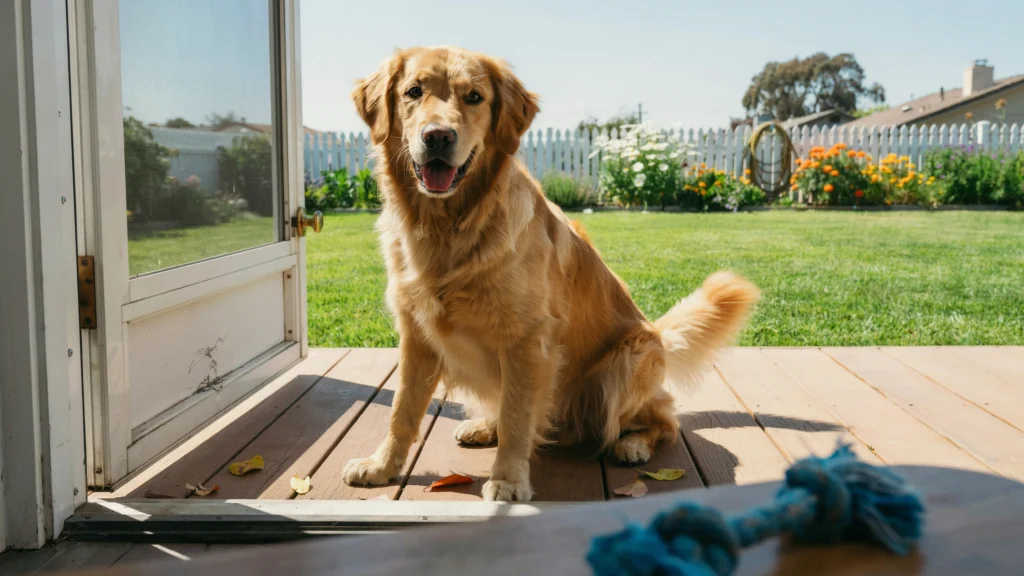
Potty training while working full-time isn’t about being home 24/7 — it’s about being consistent during the hours you are home and setting up a smart system for the hours you’re not. Follow this plan for 7 days, keep the routine going afterward, and you’ll have a reliably trained pup before you know it.
The puddles are temporary. The dog is forever.
This article is for general informational purposes. If your puppy shows signs of illness, strains to urinate, or suddenly loses potty training progress, consult your veterinarian.