Yes — dogs can safely eat plain, cooked, store-bought mushrooms such as white button, cremini, portobello, and shiitake in small amounts. But dogs should never eat wild mushrooms, which can be deadly, or mushrooms cooked with butter, oil, salt, garlic, or onions. Because dogs get complete nutrition from balanced dog food, mushrooms aren’t necessary in their diet — they’re an occasional treat at best.
If your dog eats a wild or unidentified mushroom, treat it as an emergency and call your vet or a pet poison control line immediately, even if your dog seems fine.
The Short Version: Two Very Different Questions
“Can dogs eat mushrooms?” actually hides two separate questions, and confusing them is where dogs get hurt:
- Can dogs eat the mushrooms I buy at the grocery store? Generally yes, if plain and cooked.
- Can dogs eat the mushrooms growing in the yard or on a trail? Never — assume any wild mushroom could be toxic.
The rest of this guide walks through both, plus exactly what to do in an emergency.
Which Mushrooms Are Safe for Dogs?
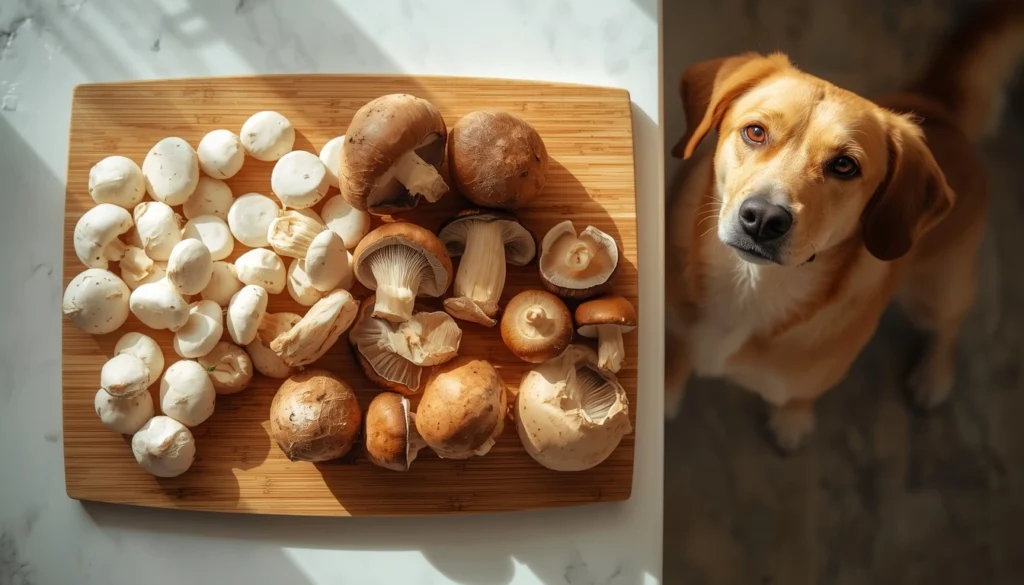
Mushrooms grown for human consumption and sold in major grocery stores are generally safe for dogs in moderation. Dogs can safely eat mushrooms grown for human consumption. Common safe varieties include:
- White button (the “common mushroom”)
- Cremini (baby bella)
- Portobello
- Shiitake
- Maitake
The important caveat: safe doesn’t mean beneficial. Although store-bought mushrooms aren’t toxic to dogs, they don’t offer many benefits either. Mushrooms contain a tough fiber called chitin in their cell walls that dogs struggle to digest, which is why even safe mushrooms should be cooked plain and served in small amounts.
How to Safely Prepare Mushrooms for Dogs
If you want to share a safe mushroom with your dog, preparation is everything:
- Buy from a reputable store. Stick to commercially cultivated mushrooms — never anything foraged.
- Wash and slice. Rinse thoroughly and cut into bite-sized pieces.
- Cook plain. To make mushrooms easier to digest, they should be steamed or sautéed in a tiny amount of water rather than oil or butter.
- No seasonings or fats. Skip butter, salt, oil, and spices entirely.
- Never garlic or onions. Garlic and onions are toxic to dogs and can cause damage to their red blood cells.
- Avoid canned and marinated. These are loaded with salt, oil, and additives.
Raw store-bought mushrooms aren’t poisonous, but the chitin makes them hard to break down, so cooking is the safer route.
Why Wild Mushrooms Are So Dangerous
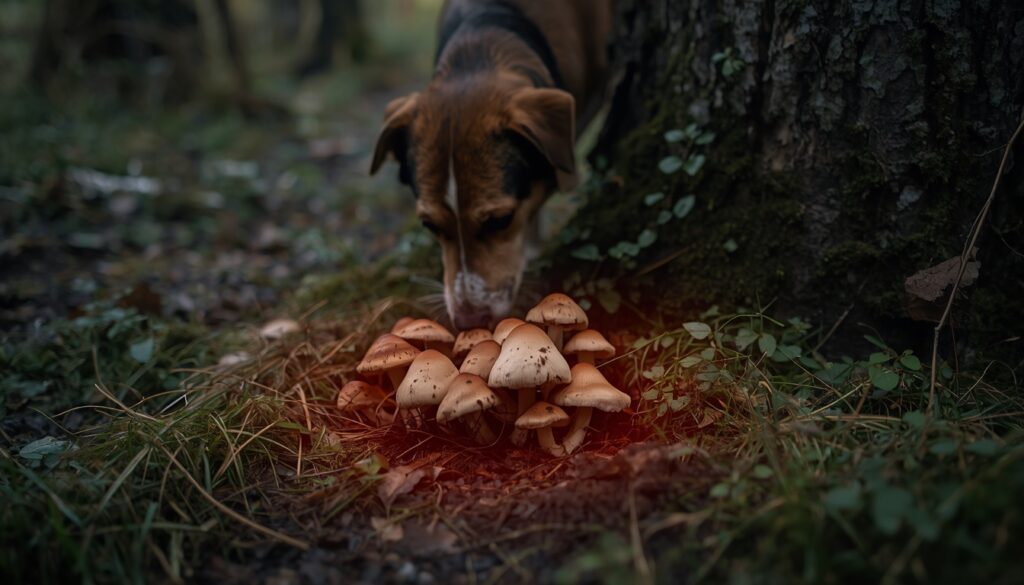
This is the part that matters most. While culinary mushrooms are low-risk, wild mushrooms are a completely different threat. Several types of wild mushrooms are highly toxic to dogs, just as they are for humans.
The terrifying part is identification. There’s no reliable way for an average person — or even a dog — to tell a safe wild mushroom from a lethal one. There is no simple test to differentiate a poisonous mushroom from a non-poisonous one. Therefore, unless a specialist can quickly identify a mushroom as non-toxic, all mushroom ingestions by pets should be considered potentially toxic.
Some of the most dangerous species include:
- Amanita phalloides (Death Cap) — causes catastrophic liver failure. As little as half of a fresh “death cap” mushroom can be fatal to an adult dog.
- Amanita ocreata (Western Destroying Angel)
- Galerina marginata (Deadly Galerina)
- Gyromitra species (False Morel)
- Inocybe and Clitocybe species
Wild mushrooms thrive after rain. Mushroom poisoning in dogs can occur any time throughout the year, but it’s most commonly reported in September and October, when many mushrooms grow. Dogs are often drawn to them by smell — some toxic Amanitas have a fishy odor dogs find appealing.
Crucially, cooking does not make a poisonous wild mushroom safe — the toxins survive heat.
The Four Types of Mushroom Poisoning in Dogs
Veterinary toxicologists group poisonous mushrooms by the organ system they attack. Knowing these helps you understand why symptoms vary so wildly.
1. Gastrointestinal mushrooms. The most common reaction. The majority of poisonous mushrooms will cause stomach upset in dogs — vomiting and diarrhea. Symptoms can appear within 15-30 minutes or up to 12 hours.
2. Hepatotoxic (liver) mushrooms. The deadliest group, including Amanita species. These are dangerous precisely because they seem harmless at first. Owners may see their dog nibble this type of mushroom, but do not become concerned because their pet looks fine immediately afterward. Then 6–24 hours later, GI symptoms occur. Some pets appear to get better for a while, but the underlying liver failure progresses.
3. Nephrotoxic (kidney) mushrooms. Symptoms include nausea, vomiting, inappetence, increased drinking and urination, and dehydration. Signs can be delayed for days.
4. Neurotoxic mushrooms. There are three types of neurotoxic mushrooms: isoxazoles, hydrazines, and psilocybin (“magic”) mushrooms. All three cause signs of toxicity quite rapidly, within 30-90 minutes, progressing to disorientation, vocalization, dizziness and staggering, tremors, and seizures.
Symptoms of Mushroom Poisoning to Watch For
Call your vet immediately if you notice any of these after possible mushroom ingestion:
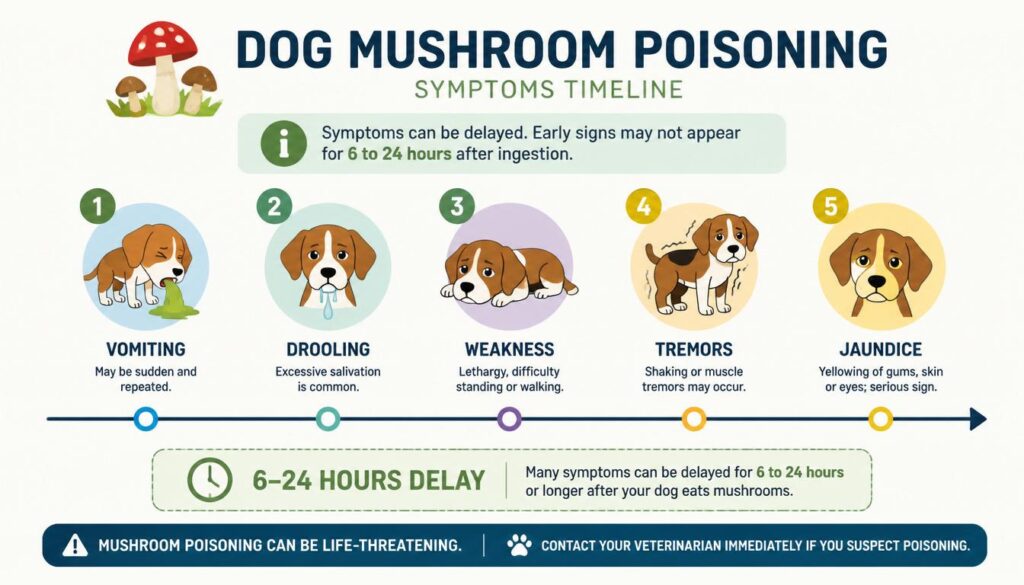
- Vomiting or diarrhea (sometimes bloody)
- Excessive drooling
- Weakness, lethargy, or collapse
- Stumbling, staggering, or loss of coordination
- Tremors or seizures
- Yellowing of the gums or eyes (jaundice — a sign of liver damage)
- Increased thirst and urination
The dangerous trap with the deadliest mushrooms is the false recovery period. Onset of signs can be delayed 6-12 hours, giving owners a false sense of security. A dog that “seems fine” after eating a wild mushroom is not in the clear.
What to Do If Your Dog Eats a Wild Mushroom
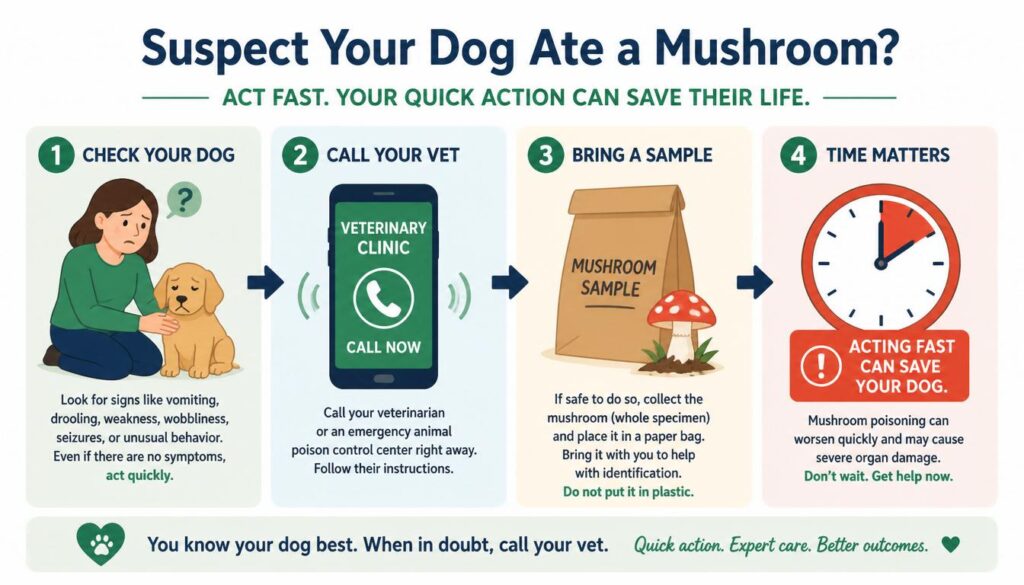
Act immediately — do not wait for symptoms.
- Remove your dog from the area and check for any mushroom pieces in the mouth.
- Call for help now. Contact your veterinarian, an emergency animal hospital, or a pet poison control line right away.
- Don’t try to identify it yourself or “wait and see.” If your dog ingests a wild mushroom, don’t worry about trying to identify the specific type — there are over 10,000 known mushroom species. Time is of the essence.
- Collect a sample if you safely can. If possible, bring a sample of the mushroom in a paper (not plastic) bag, as mushroom identification is helpful to diagnosis.
- Do not induce vomiting unless a vet specifically instructs you to.
There is no home remedy and no antidote. Unfortunately, there is no specific antidote for mushroom poisoning in dogs. Treatment varies depending on the type and amount of mushroom ingested. Vets typically manage poisoning by inducing vomiting early, giving activated charcoal to bind toxins, and providing IV fluids and liver-supportive care. As with most cases of poisoning, prompt treatment is critical to a successful outcome.
Are There Better Treats Than Mushrooms?
Since mushrooms offer little nutritional upside and carry some risk, most vets suggest easier, safer options. There are much more nutritious fruits and veggies you can feed your pup as a snack, such as blueberries, broccoli, or green beans. Carrot sticks and apple slices (no seeds) are other popular choices.
One genuine exception is veterinary medicinal mushroom supplements (like turkey tail, reishi, or maitake), which are formulated and dosed specifically for dogs. Talk to your vet before using these — they’re very different from feeding kitchen mushrooms.
Frequently Asked Questions
Can dogs eat raw mushrooms? Plain store-bought raw mushrooms aren’t toxic, but the chitin fiber is hard to digest and can cause gas or stomach upset. Cooking plain is safer.
Can dogs eat portobello or cremini mushrooms? Yes, in small amounts, when they’re store-bought and cooked plain without oil, salt, garlic, or onions.
Are mushrooms growing in my yard dangerous to my dog? Treat every yard or wild mushroom as potentially toxic. Remove them promptly and supervise your dog outdoors, especially after rain.
My dog ate a mushroom and seems fine — should I still worry? Yes. The deadliest mushrooms cause delayed symptoms 6–24 hours later, after a period where the dog looks normal. Call your vet regardless.
Do mushrooms have any health benefits for dogs? Very few. Store-bought mushrooms have low nutrient bioavailability for dogs, so they aren’t a meaningful source of nutrition.
Can puppies eat mushrooms? It’s best to avoid them. Puppies are smaller, more curious, and more vulnerable to toxins — stick to vet-approved puppy treats.
This article is for informational purposes and isn’t a substitute for professional veterinary advice. Always consult your veterinarian before introducing new foods, and contact an emergency vet immediately if you suspect mushroom poisoning.