Yes, dogs can safely eat dragon fruit. The flesh is non-toxic and offers vitamin C, fiber, and antioxidants. Feed only the peeled flesh in small amounts as an occasional treat, remove the skin, and keep it under 10% of your dog’s daily calories. Too much can cause an upset stomach or loose stool.
Dragon fruit (also called pitaya) is one of those bright, exotic fruits that’s easy to share with your dog — but only if you serve it the right way. Below you’ll find exactly how much is safe, which parts to avoid, the benefits, the risks, and when to call your vet.
Is dragon fruit safe for dogs?
Yes. Dragon fruit is non-toxic to dogs, and the soft inner flesh is safe for most healthy dogs to eat in moderation. It contains no compounds known to be poisonous to dogs, which makes it a much safer choice than fruits like grapes or raisins.
The key word is moderation. Dragon fruit should be treated as an occasional snack — not a meal replacement and not a daily staple. Your dog gets complete nutrition from their regular dog food; fruit is just a small, hydrating bonus.
Health benefits of dragon fruit for dogs

When fed in small amounts, the flesh can offer some genuine perks:
- Vitamin C — supports the immune system and acts as an antioxidant.
- Fiber — aids healthy digestion and regularity.
- Antioxidants — help fight cell-damaging free radicals.
- High water content — dragon fruit is mostly water, so it’s hydrating on hot days.
- Low calorie — a light treat that won’t pile on the pounds when portioned correctly.
- Magnesium and small amounts of iron — support muscle and overall health.
Is dragon fruit bad for dogs? The risks to know
Dragon fruit is safe, but a few things are worth watching:
- Too much causes stomach upset. The fiber and natural sugar can trigger diarrhea, gas, or vomiting if your dog eats a large amount.
- Natural sugar. It’s modest, but dogs that are diabetic or overweight should only have a tiny taste, and ideally only with your vet’s okay.
- The skin. The tough outer peel isn’t poisonous, but it’s hard to digest and can be a choking or blockage risk. Always remove it.
- Allergies. Rare, but possible. Introduce any new food slowly and watch for itching, swelling, or digestive trouble.
Are dragon fruits toxic to dogs?
No. No part of dragon fruit is toxic to dogs. The flesh and the tiny black seeds inside are safe to eat. The only part to avoid is the skin — not because it’s poisonous, but because it’s difficult to digest.
Is any part of dragon fruit poisonous?
No part of the fruit is poisonous. The seeds are tiny, soft, and safe (unlike apple seeds or cherry pits). The skin should still be removed for digestibility and to prevent choking.
Is dragon fruit a laxative for dogs?
In large amounts, dragon fruit’s fiber and high water content can loosen your dog’s stool — a mild laxative-like effect. There’s also a harmless surprise with the red-fleshed varieties: their natural pink pigment can temporarily turn your dog’s poop or urine pinkish-red. It looks alarming but isn’t dangerous and clears up on its own. If the color persists for more than a day or two, or comes with other symptoms, check with your vet to rule out blood.
How much dragon fruit can a dog eat?
Follow the 10% rule: treats, including fruit, should make up no more than 10% of your dog’s daily calories. Always start with a tiny piece the first time to make sure it agrees with your dog.
| Dog size | Suggested serving (occasional) |
|---|---|
| Small (under 20 lbs) | 1–2 small cubes |
| Medium (20–50 lbs) | 2–3 small cubes |
| Large (over 50 lbs) | A small handful of bite-sized pieces |
These are general guidelines for healthy adult dogs. When in doubt, less is better.
How to safely feed dragon fruit to your dog
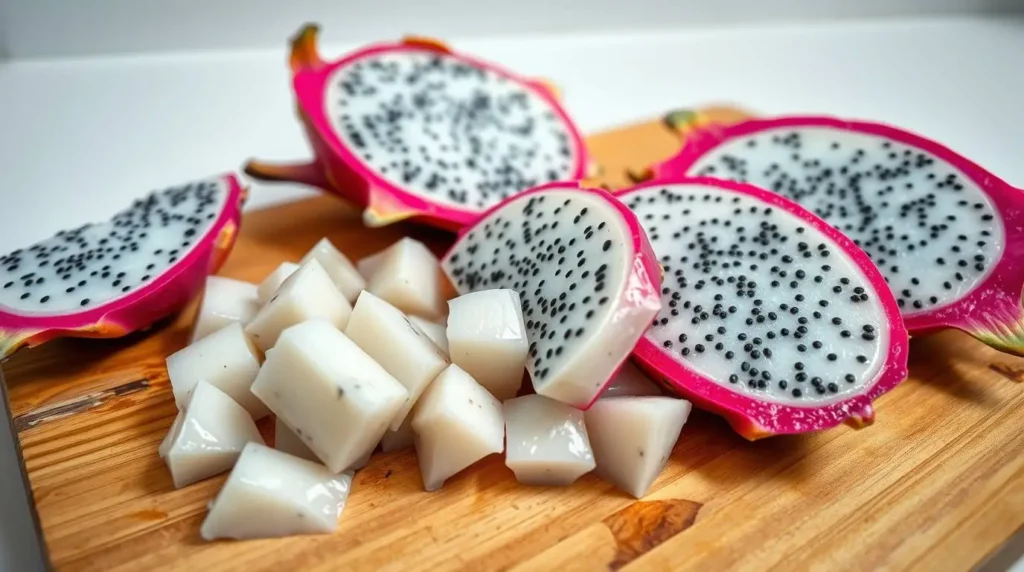
- Choose ripe fruit. It should give slightly when pressed, like a ripe avocado.
- Wash the outside before cutting.
- Cut it open and scoop out only the flesh. Discard the skin completely.
- Cut the flesh into small, bite-sized pieces to prevent choking.
- Serve plain. No sugar, syrup, or seasoning — and skip dried or processed dragon fruit, which is high in concentrated sugar.
- Start small and watch. Offer one small piece and monitor for 24 hours before giving more.
Can puppies eat dragon fruit?
A tiny taste of plain dragon fruit flesh is generally fine for puppies, but their digestive systems are sensitive, so introduce it very slowly and in even smaller amounts than you would for an adult dog. Because puppies need carefully balanced nutrition to grow, always check with your vet before adding any new food, and never let treats crowd out their regular puppy diet.
What fruits can dogs NOT eat?
While dragon fruit is safe, several common fruits are not. Avoid these:
- Grapes and raisins — highly toxic; can cause kidney failure even in small amounts. Never feed these.
- Cherries — the pits, stems, and leaves contain cyanide.
- Avocado — contains persin, which can upset a dog’s stomach.
- Citrus (lemons, limes) — very sour and can cause stomach upset in larger amounts.
- Fruit seeds and pits — apple seeds, peach and plum pits can be choking hazards and contain trace cyanide.
When trying any new fruit, confirm it’s safe first — and as always, feed in moderation.
When to call your vet
Contact your veterinarian if, after eating dragon fruit, your dog has:
- Vomiting or diarrhea that lasts more than 24 hours
- Signs of an allergic reaction (facial swelling, hives, intense itching, trouble breathing)
- Lethargy, loss of appetite, or abdominal pain
- Red or discolored stool/urine that doesn’t clear within a couple of days
Frequently asked questions
Can dogs eat dragon fruit skin? No. Remove and discard the skin. It isn’t toxic, but it’s tough, hard to digest, and a potential choking or blockage risk.
Can dogs eat the seeds in dragon fruit? Yes. The tiny black seeds are soft, edible, and safe — unlike the pits or seeds of many other fruits.
How often can my dog have dragon fruit? As an occasional treat — a few times a week at most, kept within the 10% treat rule. It shouldn’t be a daily food.
Why did my dog’s poop turn pink after eating dragon fruit? The natural pigment in red-fleshed dragon fruit can temporarily tint stool or urine pink. It’s harmless and passes on its own.
Can diabetic dogs eat dragon fruit? Only with your vet’s approval and in very small amounts, since the fruit contains natural sugar.