Dogs can eat tiny amounts of cooked bacon as a rare treat, but bacon is not safe or healthy for dogs. It’s extremely high in fat and salt, which can cause pancreatitis, dehydration, and digestive upset. Veterinarians recommend avoiding it as a regular food.
Can dogs have bacon?
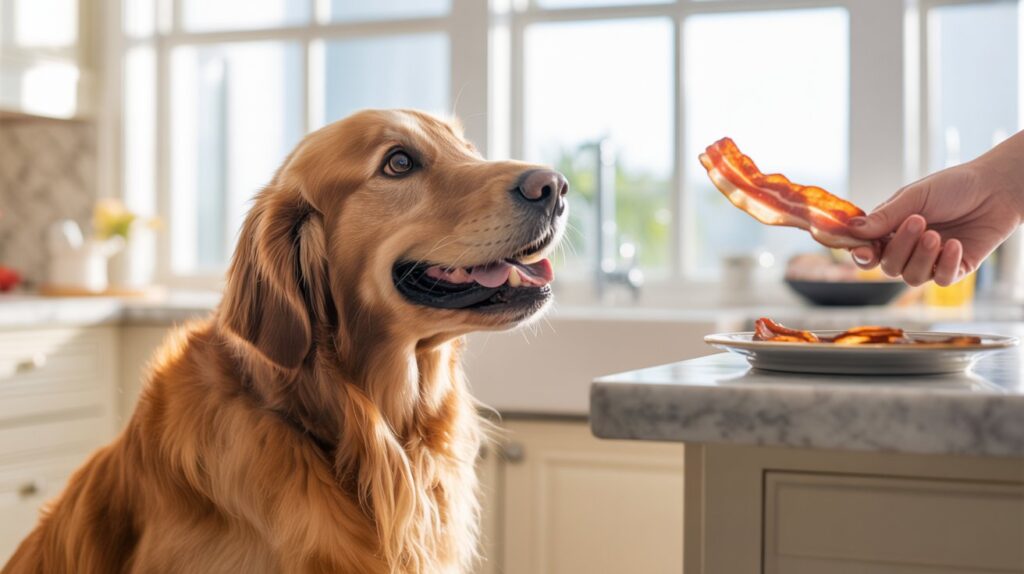
Dogs can technically eat a small piece of cooked bacon without immediate harm, but it should never be a regular part of their diet. Bacon is high in fat and sodium, both of which are unhealthy for dogs in anything more than trace amounts. A single small bite as an occasional treat is generally tolerated by healthy adult dogs, but the risks outweigh the benefits.
Why bacon is bad for dogs:
- High fat content can trigger pancreatitis, a painful and potentially life-threatening condition
- High salt content can cause excessive thirst, dehydration, and sodium ion poisoning in large amounts
- Regular feeding contributes to obesity and related health problems
- Seasonings sometimes used (garlic, onion powder) are toxic to dogs
Can dogs have turkey bacon?
Turkey bacon is not a safe alternative. While it contains slightly less fat than pork bacon, it is still highly processed and loaded with sodium and preservatives. It offers no real health advantage for dogs and carries the same risks of digestive upset and pancreatitis.
Can dogs have raw bacon?
No, dogs should not eat raw bacon. Raw pork can carry trichinella parasites and bacteria like Salmonella, which can cause serious infection. Raw bacon also has even higher fat and salt levels than cooked. If your dog eats raw bacon, monitor for vomiting, diarrhea, or lethargy and contact your vet.
Can dogs have bacon grease?
No, bacon grease is dangerous for dogs. It is pure fat and is one of the most common dietary triggers of pancreatitis in dogs. Never pour bacon grease over your dog’s food, even in small amounts.
Can dogs have Canadian bacon?
Canadian bacon is slightly leaner than regular bacon but is still high in sodium and processed. It is not recommended. A tiny piece won’t poison a healthy dog, but it shouldn’t be fed regularly.
Can dogs have bacon bits?
No, avoid bacon bits. Real bacon bits are very salty, and imitation bacon bits often contain artificial flavorings, onion, and garlic powder, which are toxic to dogs. These are among the worst bacon-related products to give a dog.
Can dogs have cooked bacon?
Cooked bacon is the only form that’s even marginally acceptable, and only in tiny, infrequent amounts. Plain, fully cooked bacon with no seasoning is less risky than raw, but it’s still high in fat and salt. One small piece on a rare occasion is the realistic limit.
What to do if your dog eats too much bacon
Watch for these symptoms over the next 24–48 hours:
- Vomiting or diarrhea
- Loss of appetite
- Lethargy or weakness
- Abdominal pain (hunched posture, whining)
- Excessive thirst
If you see these signs, contact your veterinarian immediately, as they may indicate pancreatitis or salt toxicity.
Healthier treat alternatives to bacon
- Plain cooked chicken (no skin, no seasoning)
- Carrots or green beans
- Blueberries or apple slices (no seeds)
- Commercial dog treats made for canine nutrition
Frequently asked questions
Is a small bit of bacon OK for dogs? A single small piece of plain cooked bacon won’t usually harm a healthy adult dog, but it provides no nutritional benefit and shouldn’t be a habit.
Can puppies have bacon? No. Puppies have sensitive digestive systems, and the high fat and salt content is especially risky for them.
Can a dog have bacon every day? No. Daily bacon dramatically raises the risk of pancreatitis, obesity, and sodium-related problems.
Why does my dog love bacon if it’s bad? Dogs are drawn to the fat and salt, but appeal doesn’t equal safety, just as it doesn’t for humans.